
Slovenia Travel Tips: What to Know Before You Go
These Slovenia travel tips cover the practical side of a trip: entry rules, money, driving, public transport, health, opening hours and the weather. It’s the list of things to know before visiting Slovenia, in one place. Rules and prices change, so check the official sources before you travel.
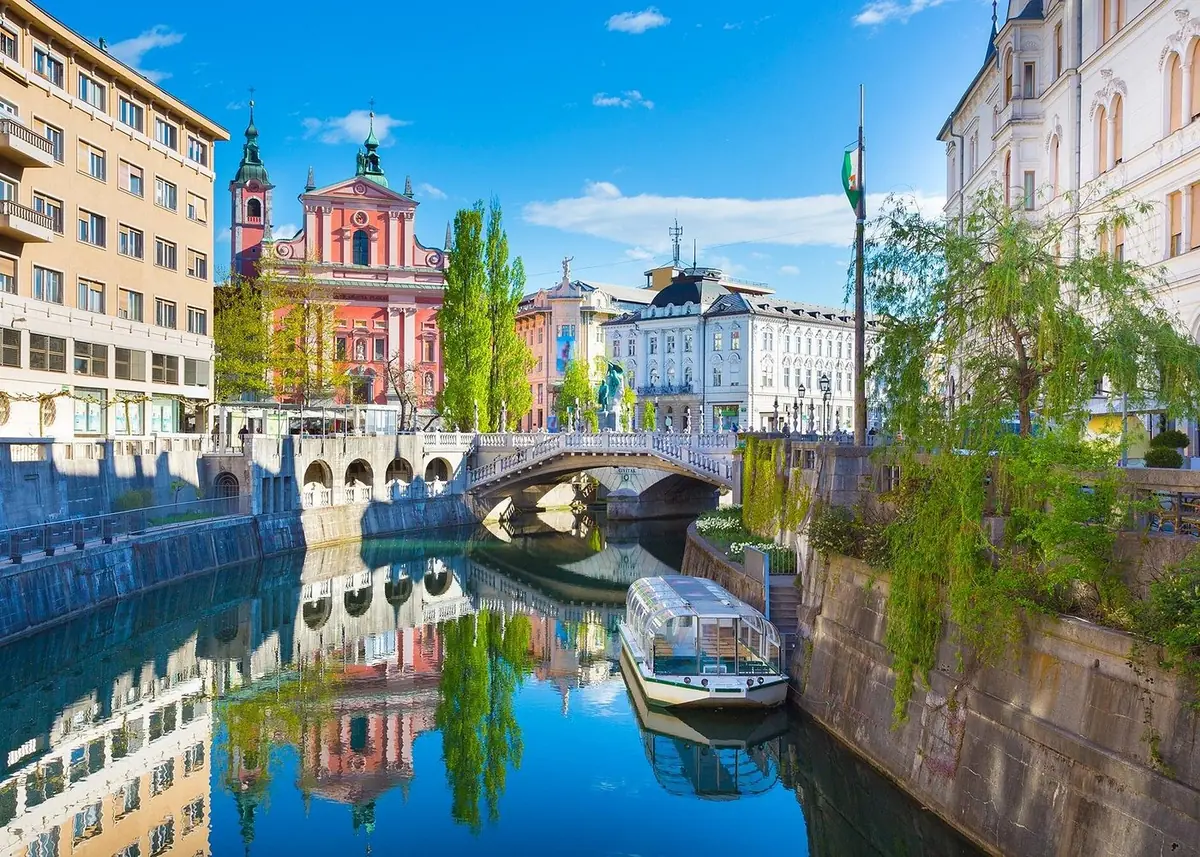
Slovenia at a Glance
| Capital | Ljubljana (about 293,000 people) |
|---|---|
| Currency | Euro (EUR) |
| Language | Slovenian. Hungarian and Italian are also official in their ethnically mixed areas. |
| Time zone | Central European Time (GMT+1), summer time GMT+2 |
| Population | About 2.1 million (2026) |
| Plugs | Type C and F (European two-pin), 230 V, 50 Hz |
| Emergency number | 112 (ambulance, fire brigade, rescue), police 113 |
| Country code | +386 |
Slovenia covers 20,273 km². It joined the EU in 2004 and the Schengen area in 2007.
Entry Rules
Documents
EU and EEA citizens can travel with an ID card or a passport. Everyone else needs a valid passport, and a visa if their country requires one.
UK passports must be issued less than 10 years before the day you arrive. They must also be valid for at least 3 months after the day you leave the Schengen area.
How long you can stay
Visa-free visitors can stay up to 90 days in any 180-day period. This limit counts all your days in the Schengen area, not only in Slovenia.
EES: the new Entry/Exit System
Non-EU travelers register their fingerprints and a photo at the first Schengen border they cross. There is no fee. The system has been fully running since 10 April 2026. Expect longer waits at the border.
ETIAS
ETIAS is not required yet. Check the official EU site before you travel. Websites that sell ETIAS now are not official.
Money
Slovenia uses the euro. Cards are widely accepted and ATMs are common. Visa, Mastercard and Maestro all work.
Tourist tax
You pay tourist tax per person per night at your accommodation. In Ljubljana it is €3.13 per adult and €1.57 for ages 7 to 18. Children under 7 pay nothing. Other towns have their own rates.
Tipping
Tipping is not obligatory. It’s a personal choice.
To estimate your budget, use the Slovenia trip cost calculator.
Driving in Slovenia
The e-vignette
Motorways and expressways need an e-vignette. Buy it online before you drive. The official seller is evinjeta.dars.si. The vignette is linked to your number plate, so there’s no sticker.
Prices for cars (class 2A) in 2026:
- 7 days: €16
- 1 month: €32
- 1 year: €117.50 (valid 12 months from the start date you choose)
Prices for 2027 have not been announced yet.
Since 1 January 2026, the H5 and H6 coastal roads near Koper need no vignette for vehicles up to 3.5 t. This applies until the new Koper–Dragonja expressway is finished.
Road rules
- Speed limits, unless signs say otherwise: 50 km/h in towns, 90 km/h outside towns, 110 km/h on expressways, 130 km/h on motorways.
- Daytime running lights or dipped headlights must be on at all times.
- Winter tyres are mandatory from 15 November to 15 March, and outside these dates in wintry conditions.
- Alcohol limit: 0.5 g/kg (0.24 mg/l in breath). It’s zero for novice and professional drivers.
- You can use a phone only with hands-free.
What you must have in the car
- Warning triangle
- First aid kit
- Reflective vest
- Spare bulbs
- Spare wheel or repair kit
For roadside assistance, call AMZS on 1987.
Karawanken tunnel from Austria
If you drive in from Austria through the Karawanken tunnel (A11), there’s a separate toll. In 2026 it’s €9 per passage for cars, on top of the Austrian vignette. Buy it at the official ASFINAG shop (shop.asfinag.at).
Vršič Pass
The Vršič Pass links Kranjska Gora and Bovec. It’s usually closed in winter, and when it opens depends on the snow.
- Since 2026 there are barriers at the top. The car park has 80 spaces. Take a ticket at the barrier. You can enter only when spaces are free, and an LED display shows how many are left.
- Parking at the top is free until the end of 2026. Driving through is free.
- In summer 2026, a free bus ran between Kranjska Gora and Bovec across the pass, from 1 June to 30 September.
Prices and bus dates for 2027 are not announced. Check the current rules before you go.
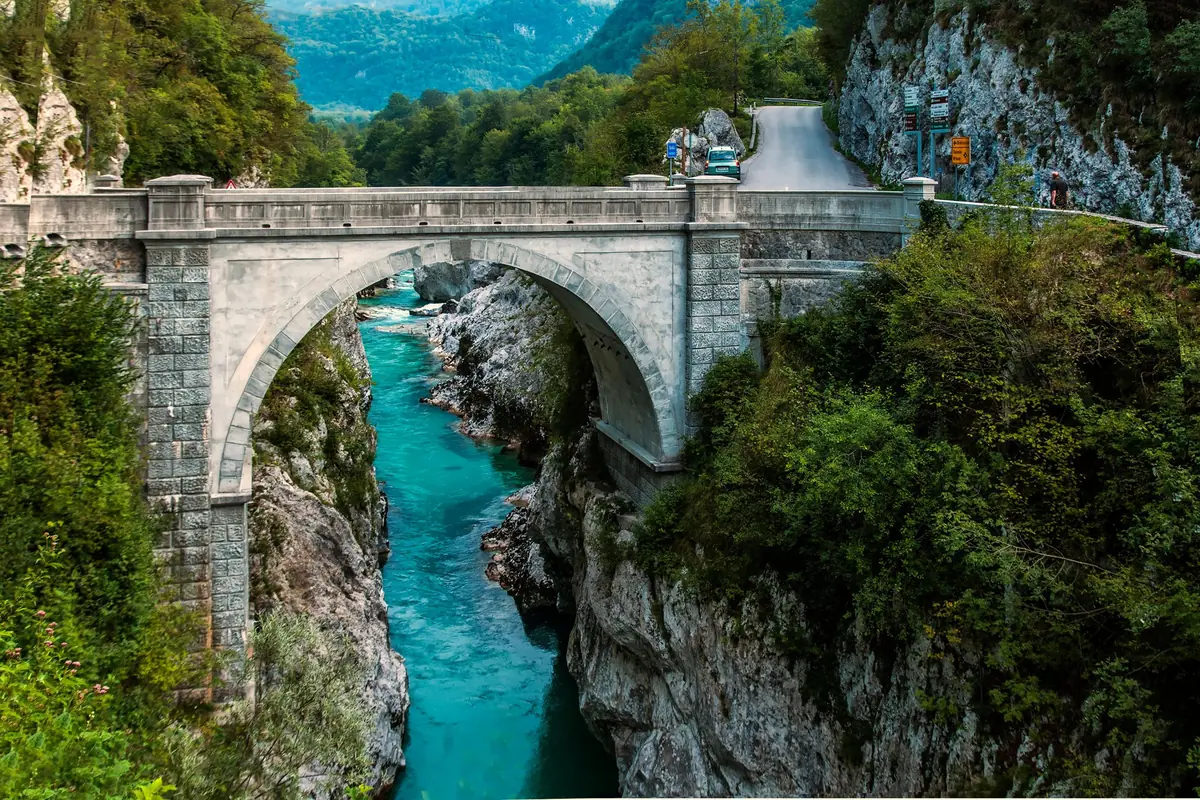
Parking in Bled
Parking in Bled costs €1.50 to €7.50 per hour, depending on the lot. If you’d rather not deal with parking, you can join one of the Lake Bled tours instead.
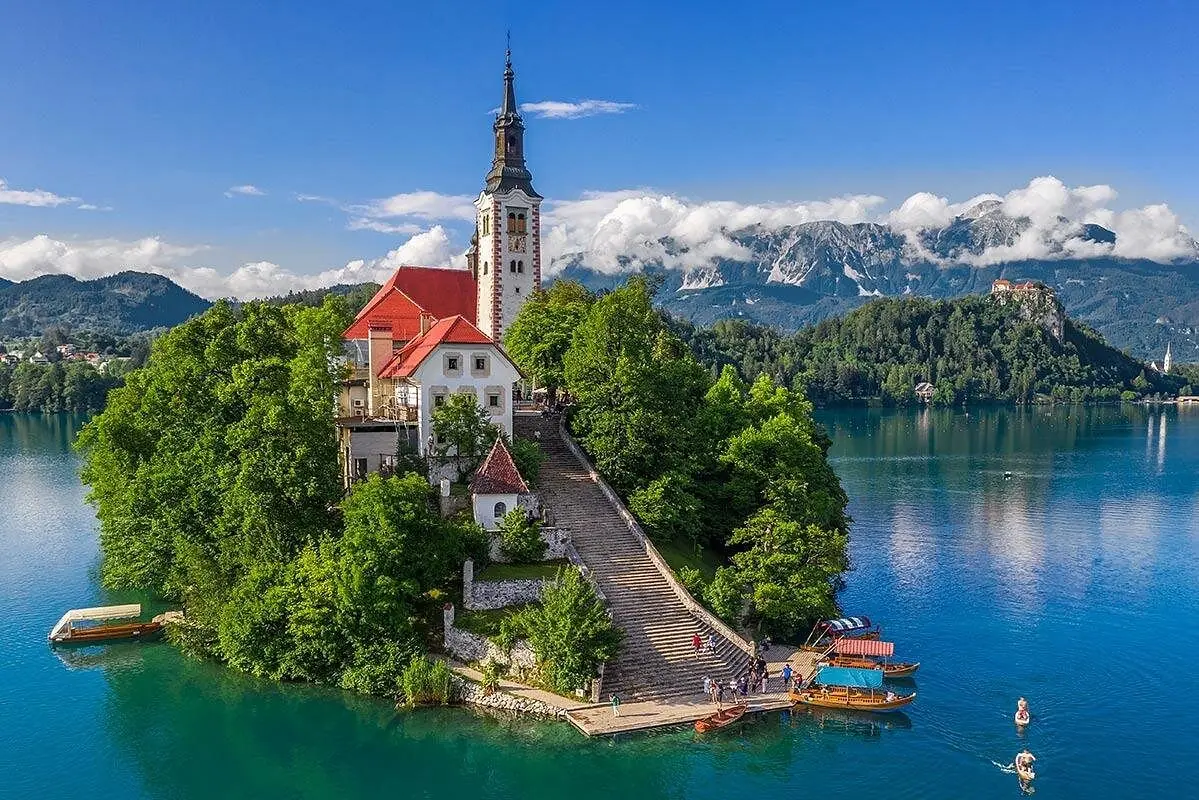
Getting Around Without a Car
Ljubljana city buses
A ride on an LPP city bus costs €1.50. With the Urbana card, one fare covers up to 90 minutes, changes included. The card costs €2, and you can get that back at the tourist information centre if you keep the receipt. You can also pay with Visa or Mastercard, but then changes are not free. The Ljubljana Card includes free city buses.
Trains and buses between towns
IJPP tickets work on both trains and buses. A daily ticket for all of Slovenia costs at most €18, a 3-day ticket at most €22, and a weekly ticket at most €36. The faster trains (IC, ICS and EC) need a supplement.
The bus from Ljubljana to Bled takes about 1 hour 20 minutes and costs around €7.
To work out which places fit in one day, try the Slovenia day trip planner. If public transport doesn’t suit your plans, a private driver in Slovenia is another option.
Arriving at Ljubljana Airport
Ljubljana Jože Pučnik Airport has three main ways into the city. Times and fares are approximate, so check current fares before you go.
- Public bus: about 45 to 50 minutes, around €4.
- Shared shuttle (for example GoOpti): about 30 minutes, around €9 to €14 per person.
- Taxi: about 25 to 30 minutes, around €35 to €45.
You can also book a Ljubljana airport transfer before you land.
Health and Safety
Slovenia ranked 4th on the Global Peace Index 2026. In an emergency, call 112 for an ambulance, the fire brigade or rescue. The police number is 113.
Health insurance
EU travelers should bring the European Health Insurance Card (EHIC). UK travelers should bring a GHIC or EHIC. Neither card replaces travel insurance.
Ticks
Tick bites and tick-borne encephalitis are a risk in forests and meadows. Check vaccine advice before you travel.
Tap water
Tap water is safe to drink, and many towns have public drinking fountains. After heavy rain, don’t drink tap water if it looks cloudy.
In the Julian Alps
Camping without permission in the Julian Alps can be fined up to €500 per person. Entry to the Savica waterfall is free. Vintgar Gorge, Tolmin Gorges and Mostnica Gorge have tickets.
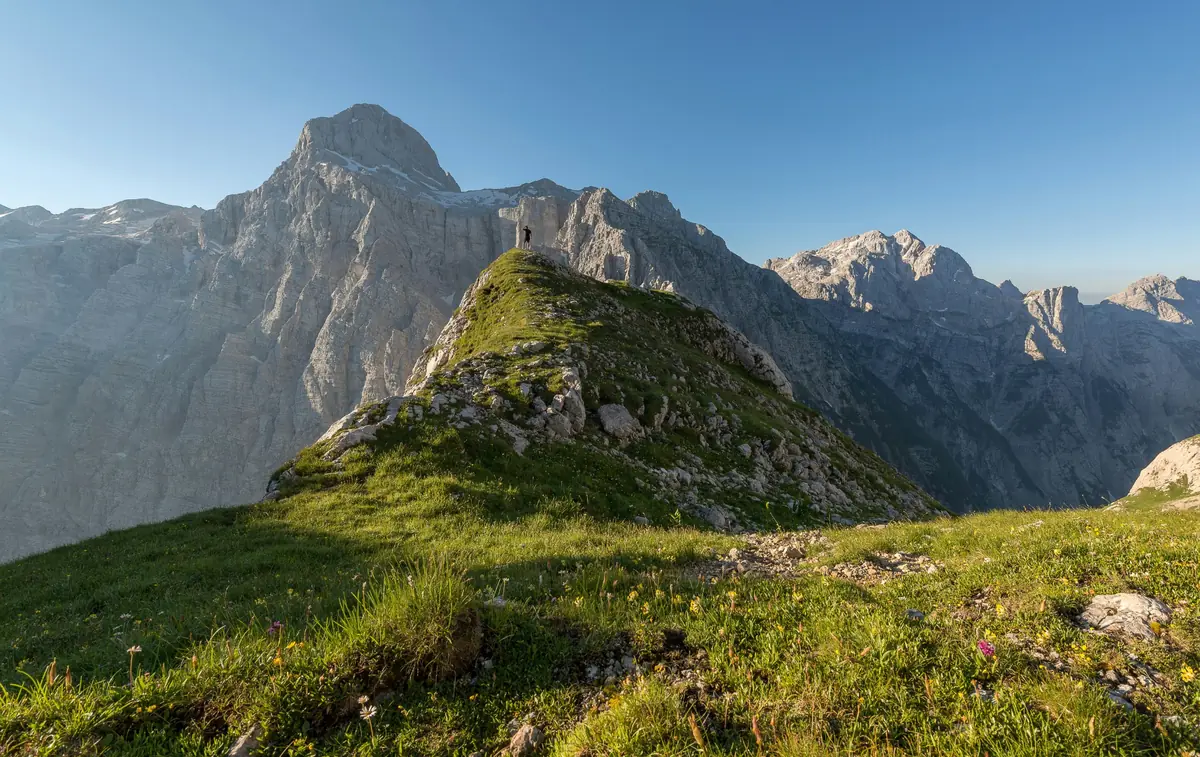
Opening Hours and Public Holidays
Opening hours
- Shops: Monday to Saturday, roughly from 7:00–9:00 to 19:00–21:00. Most shops are closed on Sundays.
- Banks: Monday to Friday, 9:00–17:00.
- Post offices: Monday to Friday 8:00–18:00, Saturday 8:00–12:00.
- Pharmacies: Monday to Friday 7:00–19:00, Saturday 7:00–13:00.
- Many museums are closed on Mondays.
- Big petrol stations on motorways are open 24 hours.
Public holidays in 2027
- 1–2 January: New Year
- 8 February: Prešeren Day (culture day)
- 28–29 March: Easter Sunday and Monday
- 27 April: Day of Uprising Against Occupation
- 1–2 May: Labour Day
- 16 May: Whit Sunday
- 25 June: Statehood Day
- 15 August: Assumption
- 31 October: Reformation Day
- 1 November: Remembrance Day
- 25 December: Christmas
- 26 December: Independence and Unity Day
Many shops and offices close on public holidays.
Weather and When to Go
Slovenia has Alpine, Pannonian and Mediterranean climates. The average temperature is about 21°C in July and about 0°C in January.
- Summer (June to August): the warmest and busiest time. All outdoor activities are running.
- Spring to autumn: the main season for water activities like rafting in Slovenia, kayaking and canyoning.
- April to November: Vintgar Gorge is open.
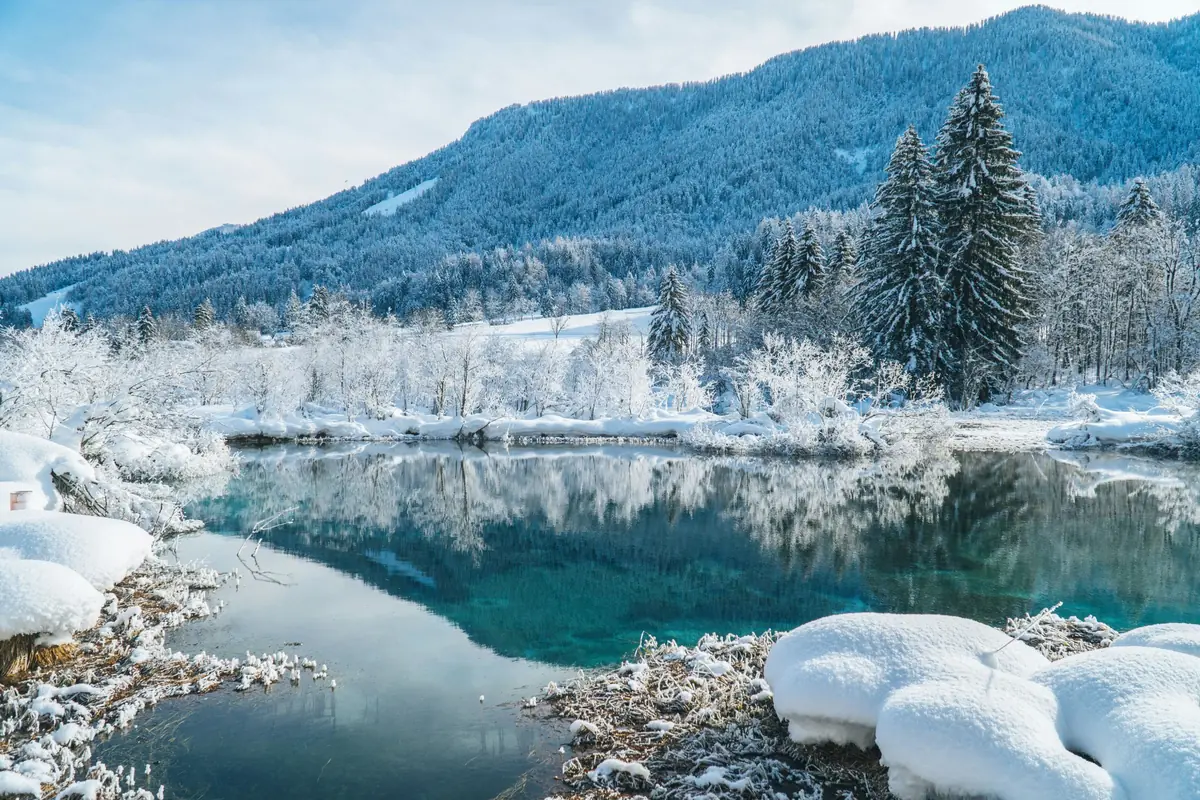
- Winter: a good time for city tours, food and wine tours, caves, and winter activities in the Alps like snowshoeing and ski touring. The Vršič Pass is usually closed.
Postojna Cave and Škocjan Caves are open all year and stay cool inside, so cave tours in Slovenia work in any season.
For the weather forecast, use meteo.arso.gov.si. For traffic and road conditions, use promet.si.
Facts checked: November 2026.
Frequently Asked Questions
Do I need ETIAS to visit Slovenia?
No, ETIAS is not required yet. Check the official EU site before you travel. Websites that sell ETIAS now are not official.
Do I need a vignette to drive in Slovenia?
Yes, on motorways and expressways. Buy the e-vignette online before you drive, at evinjeta.dars.si. It’s linked to your number plate, so there’s no sticker.
Is tap water safe to drink in Slovenia?
Yes. Many towns also have public drinking fountains. After heavy rain, don’t drink tap water if it looks cloudy.
Can I pay by card in Slovenia?
Yes, cards are widely accepted and ATMs are common. Visa, Mastercard and Maestro all work.
Do you tip in Slovenia?
Tipping is not obligatory. It’s a personal choice.
What plugs does Slovenia use?
Type C and F, the European two-pin plugs. The voltage is 230 V, 50 Hz.
Are shops open on Sundays in Slovenia?
Most shops are closed on Sundays. Big petrol stations on motorways are open 24 hours.
When do I need winter tyres in Slovenia?
From 15 November to 15 March, and also outside these dates in wintry conditions.