

Best Places to Visit in Slovenia: 18 Spots, From Lake Bled to Piran
The best places to visit in Slovenia are Ljubljana, Lake Bled, Lake Bohinj, Piran, Postojna Cave and the Soča Valley. With more time, add Škocjan Caves, Triglav National Park, Logar Valley and the wine towns of Maribor and Ptuj. Slovenia is small, so most of these are within about two hours’ drive of Ljubljana.
The whole country covers about 7,800 square miles (20,000 km²). That’s smaller than New Jersey. But it has Alpine peaks, a short Adriatic coast, huge cave systems, wine hills and a relaxed capital. This guide covers 18 places worth your time, with what to see, how long to stay, how to get there and which tours make sense. If you’re still deciding where to go in Slovenia, start with the quick picks below.
Where to Go in Slovenia: Quick Picks
Pick by what you like most:
- First trip, short on time: Ljubljana, Lake Bled and Postojna Cave
- Lakes and mountains: Lake Bled, Lake Bohinj, Kranjska Gora, Triglav National Park, Logar Valley
- Adventure: Soča Valley and Bovec for rafting, kayaking, canyoning and ziplining
- Caves and karst: Postojna Cave, Predjama Castle, Škocjan Caves, Rakov Škocjan
- Coast: Piran, Strunjan and Koper
- Wine and food: Maribor, Ptuj and the Kras region
- Away from the crowds: Velika Planina, Kočevje forests, Logar Valley
Drive times below are from Ljubljana and are rough. Traffic, season and road works can change them.
1. Ljubljana: Slovenia’s Small, Walkable Capital

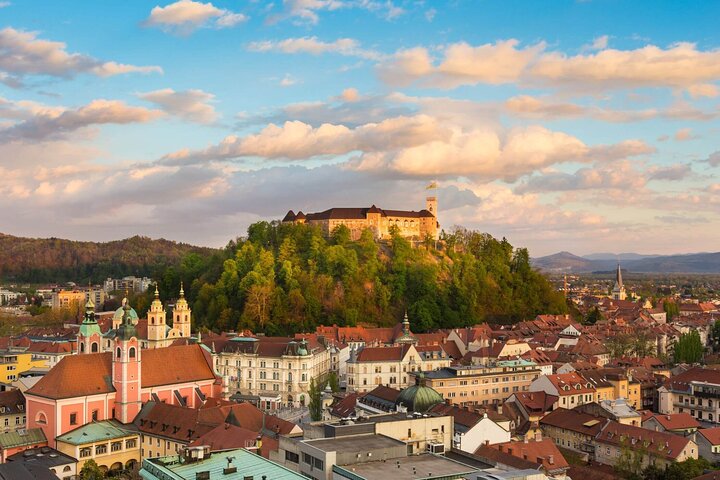
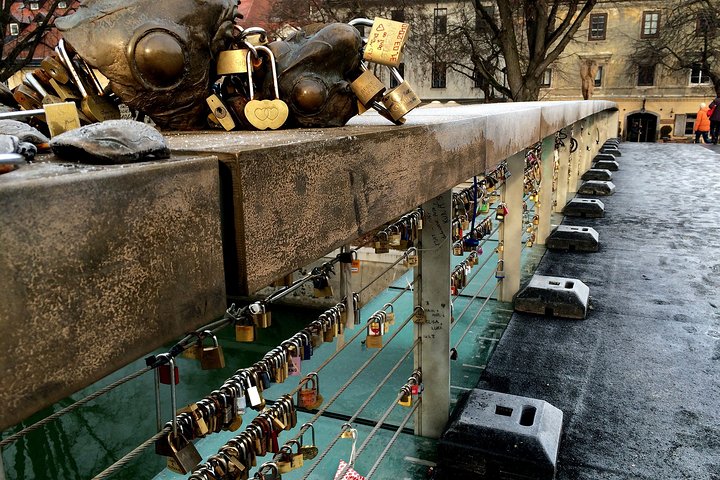
Ljubljana (said “lyoo-blyah-nah”) is Slovenia’s capital and biggest city. But with around 300,000 people, it feels more like a large town. The old town is car-free, the river is lined with cafés, and you can see the main sights in a day on foot.
What to See in Ljubljana
- Car-free old town along the Ljubljanica River
- Jože Plečnik’s architecture, including the Triple Bridge, the Central Market and the National and University Library. His Ljubljana works are on the UNESCO World Heritage list.
- Dragon Bridge, with its four dragon statues, the city’s symbol
- Ljubljana Castle above the old town. Walk up or take the funicular.
- Prešeren Square, the city’s main meeting point
Local tip: Take a boat trip on the Ljubljanica River. It’s a slow, easy way to see the bridges and riverside buildings.
Time needed: 1 to 2 days. Ljubljana is also the best base for day trips, since most roads and train lines run through it.
Recommended Ljubljana tours:
2. Piran: A Venetian Town on the Adriatic
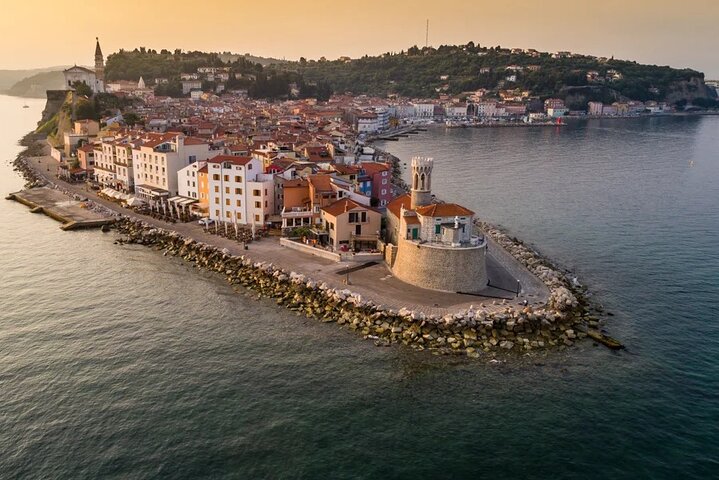
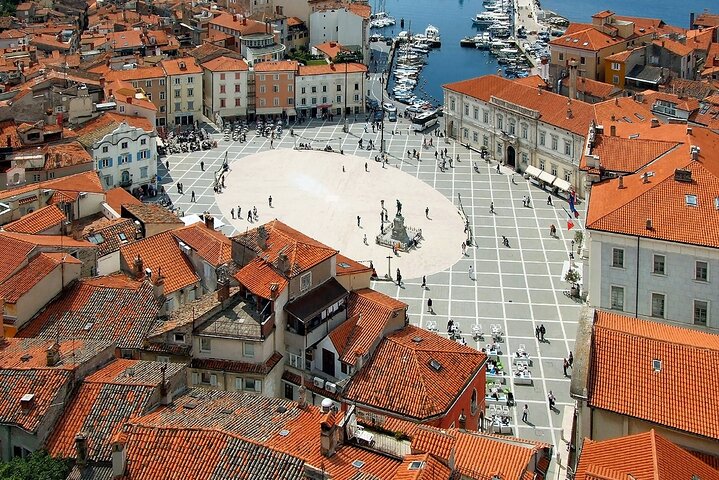
Piran is the most photographed town on the Slovenian coast. It grew up under Venetian rule, and it still looks and feels Italian: narrow lanes, stone houses and a big square by the sea.
Piran Highlights
- Tartini Square: the center of the old town
- St. George’s Parish Church: climb the bell tower for views over the red roofs
- Town walls: some of the best views of the coast
- Fresh seafood at restaurants along the waterfront
- Sečovlje Salt Pans: a short drive south, where salt is still made the traditional way
Piran’s center is closed to most cars. Visitors usually park in a garage outside town and take a shuttle or walk in. Check current parking rules before you go.
From Ljubljana: about 1.5 hours by car. Time needed: half a day to a full day. Don’t rush it. Piran is best enjoyed slowly.
Recommended Piran tours:
3. Postojna Cave & Predjama Castle


Postojna Cave is one of Slovenia’s most visited sights. The cave system is about 24 km long and was carved by the Pivka River. You don’t need any caving skills. Most of the visit is on a train and paved paths.
What the Postojna Visit Includes
- Electric train ride deep into the cave
- Guided walk of about 1.5 km on lit paths
- Huge halls and formations, plus a tank with the olm, a blind cave salamander
- Any-weather visit: the cave stays cool all year, so bring a jacket even in summer
The standard tour takes about 1.5 hours. Predjama Castle is a short drive away. It’s built into the mouth of a cave in a 123-meter cliff, and it’s one of the most unusual castles in Europe. Combined tickets for both are sold. Check current prices and tour times on the official website. For more detail, read this guide to Postojna Cave.
From Ljubljana: about 45 minutes by car. Trains also run to Postojna town, but the cave is a walk or short ride from the station. Time needed: half a day for both sights.
Recommended Postojna Cave & Predjama Castle tours:
4. Lake Bled: Slovenia’s Most Famous View

Lake Bled is the picture most people have of Slovenia: a green-blue Alpine lake, a tiny island with a church and a castle on a cliff. It’s busy in summer. But it’s still worth seeing.
Things to Do at Bled
- Walk around the lake. The path is about 6 km and mostly flat.
- Take a pletna boat to Bled Island, then climb the 99 steps to the church
- Ring the wishing bell in the Church of the Assumption
- Visit Bled Castle on its cliff about 130 meters above the water
- Hike to the Ojstrica or Mala Osojnica viewpoints for the classic photo from above
- Try Bled cream cake (kremšnita). Hotel Park is where the recipe started.
Tip: Go early in the morning or late in the afternoon for fewer people and softer light. Vintgar Gorge is close by. It’s seasonal and may need tickets in advance, so check before you go.
From Ljubljana: about 45 minutes by car. Buses run often. The train goes to Lesce-Bled station, a few kilometers from the lake. Time needed: a full day, or a night if you want quiet mornings.
Recommended Lake Bled tours:
5. Škocjan Caves: UNESCO-Listed Underground Canyon
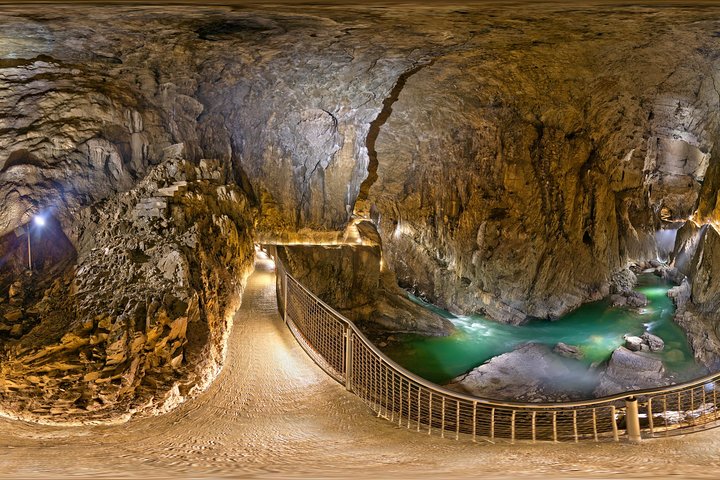
Postojna gets more visitors. But Škocjan Caves feel wilder. They’re on the UNESCO World Heritage list, and the highlight is a massive underground canyon cut by the Reka River.
What Makes Škocjan Different
- Huge underground chambers that feel like cathedrals
- The Reka River roaring far below the path
- A narrow bridge high above the canyon floor
- More walking, with stairs and slopes. No train.
- Less commercial than Postojna
Photography is restricted inside the cave, so check the rules on arrival. Wear good shoes and bring a warm layer.
From Ljubljana: about 1 hour by car. It’s also easy to visit on the way to or from the coast. Time needed: half a day.
Recommended Škocjan Caves tours:
6. Strunjan Nature Reserve: Cliffs, Salt Pans and Moon Bay
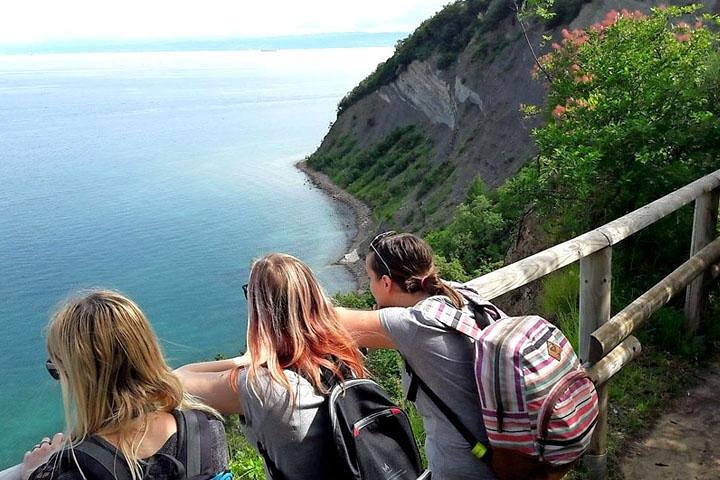
Strunjan is the most natural stretch of the Slovenian coast. It sits between Piran and Izola and has an 80-meter flysch cliff, the country’s only sea lagoon, and quiet pebble beaches.
Strunjan Highlights
- Moon Bay: a pebble beach under the cliff, reached only on foot
- Cliff-top path past the Strunjan Cross, with views across the Gulf of Trieste
- Strunjan salt pans, where salt is still made the old way
- Stjuža lagoon, a good spot for birdwatching
- Fewer people than the town beaches, since you have to walk in
Safety note: Parts of the cliff above Moon Bay are fragile and rockfalls happen. The local tourist board publishes a hazard map. Avoid the marked high-risk sections and don’t sit right under bare cliff faces. The path down is steep, so wear proper shoes.
From Ljubljana: about 1.5 hours by car. Time needed: half a day, or combine it with Piran.
Recommended tour near Strunjan:
7. Maribor: Wine, the Old Vine and Pohorje
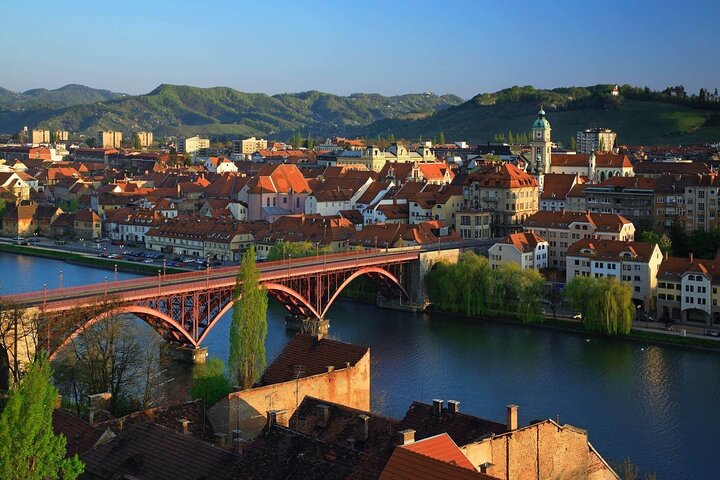
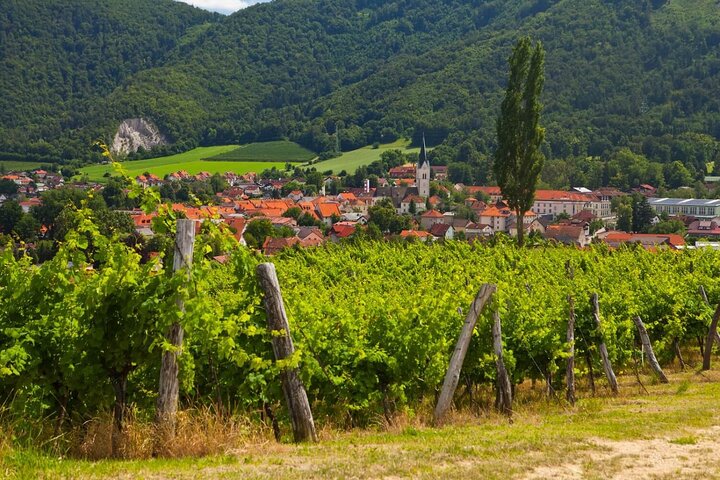
Maribor is Slovenia’s second-largest city. It sits on the Drava River in the northeast, near the Austrian border, and it’s the main town of the Štajerska (Styria) wine region.
Maribor Highlights
- Lent: the old riverside quarter
- The Old Vine: the world’s oldest grapevine, over 400 years old and still bearing grapes
- Festival Lent: a big summer festival of music and street performance
- Pohorje: hiking and mountain biking in summer, skiing in winter
- Wine tasting in the city and the hills around it
Winter bonus: Mariborsko Pohorje is Slovenia’s largest ski area, and it starts right at the edge of the city. Night skiing is offered on some slopes. Check current lift and night-skiing status before you go. If wine is your main reason to come, a guided wine tour is the easiest way to visit several cellars without driving.
From Ljubljana: about 1.5 hours by car, or about 2 hours or more by train. Time needed: 1 to 2 days, especially if you add Ptuj.
Recommended Maribor tours:
8. Koper: Old Town and Port City
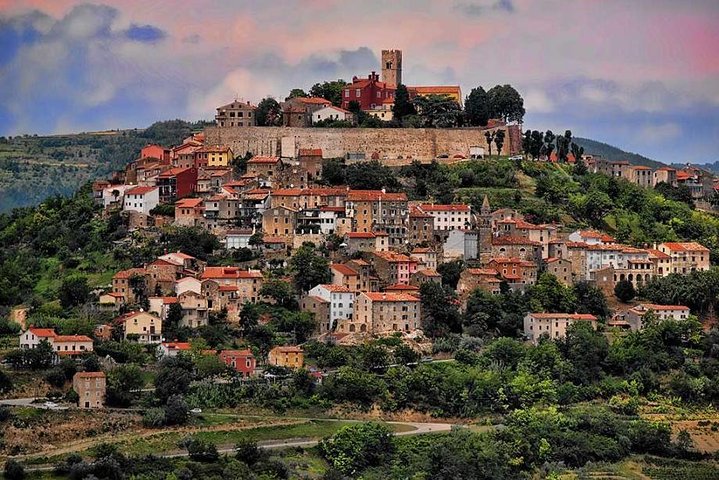
Koper is the largest town on the Slovenian coast. It has a stone-built Venetian old town and Slovenia’s only cargo port. It’s less polished than Piran, but it feels more like a place where people actually live. Cruise ships also dock here.
Koper Highlights
- Tito Square and the old town lanes
- Seaside promenade for evening walks
- A good base for Istrian wine villages and olive oil farms
- Coastal cycling along the old Parenzana railway route
- Easy trips to Piran, Izola and the Karst villages
From Ljubljana: about 1 hour 15 minutes by car. Trains and buses also run. Time needed: half a day.
Recommended Koper tours:
9. Lake Bohinj: Bled’s Quieter Neighbor
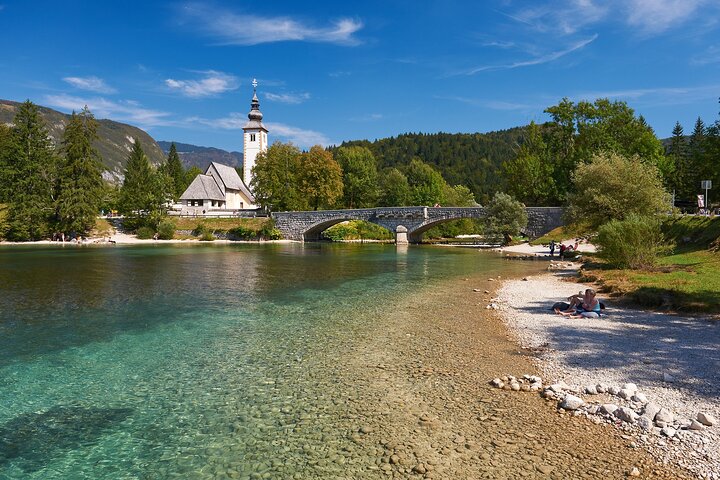
Lake Bohinj is inside Triglav National Park, about half an hour past Bled. It’s bigger than Lake Bled, less built up, and surrounded by mountains. Many Slovenians prefer it.
Why Go to Bohinj
- More space to swim and fewer buildings around the shore
- Savica Waterfall: a 78-meter waterfall, reached by a short but steep walk with steps
- Vogel cable car up to views over the lake and the Julian Alps
- Water sports: kayaking and paddleboarding on the lake, rafting on the Sava Bohinjka river
- Mostnica Gorge, with a walk to the Mostnica waterfall in the Voje valley
- Campsites for travelers on a budget
From Ljubljana: about 1 hour 15 minutes by car. Time needed: a full day. Most people combine it with Bled.
Recommended Lake Bohinj tours:
10. Kranjska Gora: Alpine Village and Gateway to Vršič
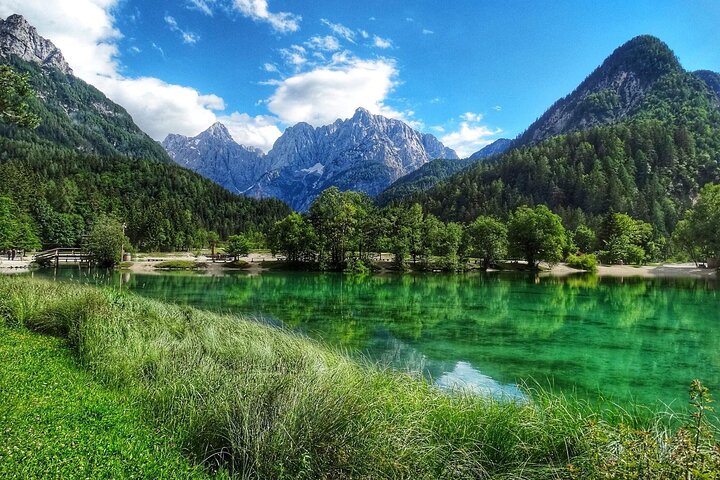
Kranjska Gora is a small mountain village in the far northwest, close to Austria and Italy. The village itself is mostly hotels and holiday homes. The reason to come is the scenery around it.
Kranjska Gora Highlights
- Lake Jasna: a small lake with mountain reflections, just outside the village
- Zelenci Nature Reserve: emerald-green springs in a wetland
- Vršič Pass: Slovenia’s highest mountain road, leading over to the Soča Valley. It’s usually closed in winter.
- Planica: the valley with the famous ski-jumping hills
- Winter sports: skiing and cross-country skiing
From Ljubljana: about 1 hour by car. Time needed: a day, or longer as a hiking base.
Recommended Kranjska Gora tours:
11. Ptuj: Slovenia’s Oldest Town
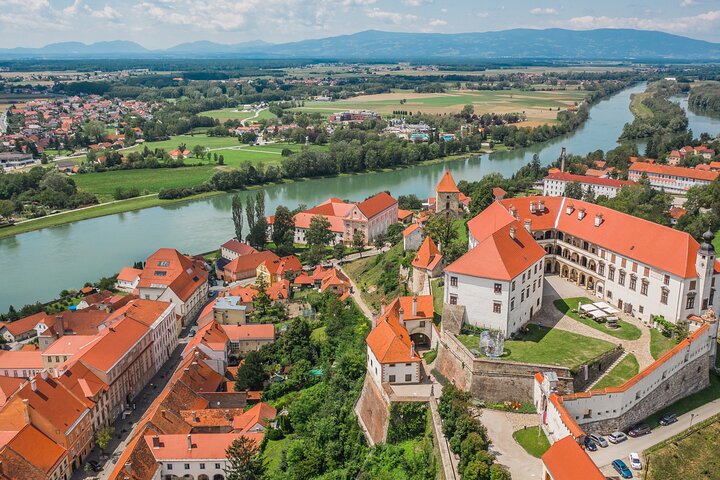
Ptuj is a small town on the Drava River with Roman roots. It’s often called the oldest town in Slovenia. It’s compact, easy to walk and much quieter than the coast or the lakes.
Ptuj Highlights
- Ptuj Castle on the hill, with museum collections and views over the river
- Historic wine cellar in the old town, one of the oldest in Slovenia
- Kurentovanje: the winter carnival. The kurent door-to-door tradition is on UNESCO’s intangible heritage list.
- Roman and medieval traces around the old town
Best for: history fans and anyone who wants a quieter town.
From Ljubljana: about 1.5 hours by car. It’s about 30 minutes from Maribor. Time needed: half a day.
Recommended Ptuj tours:
12. Logar Valley: Easy Walks in an Alpine Valley
Logar Valley (Logarska dolina) is a glacial valley in the Kamnik-Savinja Alps. It has steep rock walls, green meadows, old farms and easy trails. It’s one of the best places in Slovenia for mountain views without a hard hike.
Logar Valley Highlights
- Valley trail to the 90-meter Rinka Waterfall at the end of the valley
- Easy family walks for most fitness levels
- Traditional farms, some serving local food
- Neighboring valleys Robanov Kot and Matkov Kot for longer days
Cars pay an entrance fee to the landscape park in the main season. Check the current fee before you go. For longer routes in this area or in the Julian Alps, hiking tours in Slovenia come with a local guide and transport.
From Ljubljana: about 1 hour 45 minutes by car. Public transport is limited. Time needed: a full day.
13. Soča Valley: Slovenia’s Adventure Hub
The Soča River is known for its bright emerald-green water. The valley near the Italian border, around Bovec, Kobarid and Tolmin, is the main spot for outdoor adventure in Slovenia.
Things to Do in the Soča Valley
- Rafting through rocky gorges
- Kayaking on the river
- Canyoning through waterfalls and pools
- Fly fishing for the local marble trout
- Short walks to the Great Soča Gorge, Kozjak Waterfall and Tolmin Gorges
- WWI history: the Isonzo Front, with the Kobarid Museum and outdoor trails
The river is very cold, even in summer. Wetsuits are included on most guided trips. Hiking, cycling and paragliding are popular here too. For something faster, look at zipline tours in Slovenia. Bovec has one of the longest zipline setups in the country.
From Ljubljana: about 2 to 2.5 hours by car. In summer, you can drive over the Vršič Pass from Kranjska Gora. Time needed: 1 to 3 days.
Recommended Soča Valley tours
14. Velika Planina: Herdsmen’s Huts on a High Plateau
Velika Planina (“Big Pasture”) is a high plateau above Kamnik. It’s known for its herdsmen’s settlement, one of the largest in Europe, with dozens of wooden huts topped with low shingle roofs.
Velika Planina Highlights
- Cable car and chairlift from the Kamniška Bistrica valley. Check the schedule, since they may stop in bad weather.
- Traditional huts with spruce shingle roofs
- Homemade dairy products from herdsmen in summer, roughly June to September
- A small museum hut showing how herdsmen lived
- Easy walks across open pastures
What to eat: sour milk and žganci (buckwheat spoonbread), the classic herdsman’s meal.
From Ljubljana: about 45 minutes by car to the lower cable car station. Time needed: half a day to a full day.
15. Triglav National Park: Slovenia’s Only National Park
Triglav National Park covers much of the Julian Alps. It’s named after Mount Triglav (2,864 m), Slovenia’s highest peak and a national symbol. The park includes Lake Bohinj, the upper Soča Valley, the Seven Lakes Valley and many waterfalls. Lake Bled is just outside the park.
Park Highlights
- Climbing Triglav: usually a two-day route with a night in a mountain hut
- Hiking trails for every level, from valley walks to high routes
- Alpine lakes, including Bohinj and the Seven Lakes Valley
- Wildlife such as chamois and ibex
- Old shepherd and farm villages throughout the park
Important: Climbing Triglav is a serious undertaking. It needs good fitness, proper gear, a head for heights and stable weather. Most first-timers go with a mountain guide. Huts are generally open only in summer, so check opening dates.
From Ljubljana: about 1 hour to the park’s edge. Time needed: from a day to a week.
Recommended Triglav National Park tours
16. Kras Region: Where “Karst” Got Its Name
The Kras plateau gave its name to karst landscapes worldwide. That’s land where water dissolves limestone and leaves caves, sinkholes and underground rivers. Above ground, it’s a region of stone villages, vineyards and strong winds.
Kras Highlights
- Stone villages with old stone houses and walls
- Lipica Stud Farm: the original home of the Lipizzaner horses
- Štanjel: a hilltop village with a castle and a terraced garden
- Kras prosciutto (pršut), air-dried by the bora wind
- Teran wine from red terra rossa soil
Food tip: Look for an osmica. These are farmhouses that open for a few days at a time to sell their own wine and food.
From Ljubljana: about 1 hour by car. It’s easy to combine with Škocjan Caves or the coast. Time needed: half a day to a full day.
Recommended Kras tour
17. Kočevje Forests: Slovenia’s Wildest Region
The Kočevje area in the south is almost entirely forest. It holds some of Europe’s last old-growth beech forests, part of a UNESCO World Heritage site, and it’s the core of Slovenia’s brown bear range.
Kočevje Experiences
- Forest trails in the Rog and Kočevski Rog area
- Cycling on quiet forest roads
- Guided bear watching from hides, usually from spring to autumn
- Ancient forest reserves with very tall beech and fir trees
- Very few foreign tourists
Safety note: Bears live here. Make noise as you walk, keep food packed away and don’t go off-trail at dusk. For bear watching, always go with a licensed guide.
From Ljubljana: about 1 hour by car. Time needed: a full day, or an evening for bear watching.
18. Rakov Škocjan: Natural Bridges and Karst Valley
Rakov Škocjan is a short karst valley near Cerknica and Postojna. The Rak River flows through it, in and out of caves, under two natural stone bridges. It’s an easy walk and a good place to see how karst works.
Rakov Škocjan Highlights
- Big and Little Natural Bridge
- Marked nature trail along the valley
- Caves and springs along the River Rak
- Easy to combine with Postojna Cave or Lake Cerknica, a lake that appears and disappears with the seasons
From Ljubljana: about 50 minutes by car. Time needed: 2 to 3 hours. Good for families and anyone curious about geology.
Combine it with a Postojna Cave tour
How Many Days Do You Need in Slovenia?
You can see the highlights in 3 days. A week lets you add the coast, the mountains and a slower pace. Here are simple routes, all based on Ljubljana or easy moves from it:
3 Days
- Day 1: Ljubljana
- Day 2: Lake Bled and Lake Bohinj
- Day 3: Postojna Cave and Predjama Castle
5 Days
- Days 1 to 3: the route above
- Day 4: Škocjan Caves, then Piran and Strunjan
- Day 5: Kranjska Gora and the Soča Valley over the Vršič Pass (summer only)
7 to 10 Days
Add a night or two in the Soča Valley for outdoor activities, a day in the Kras region, a day in Logar Valley or Velika Planina, and a day for Maribor and Ptuj. With 10 days, there’s time for a Triglav hike or bear watching in Kočevje.
Getting to and Around Slovenia
Getting There
Ljubljana Jože Pučnik Airport is the main airport, about 25 km north of the city. Many travelers also fly into Venice, Trieste, Zagreb, Graz or Klagenfurt and drive or take a bus from there. Trains and long-distance buses connect Ljubljana with neighboring countries. Check current routes, since they change often.
Public Transport
Trains run by Slovenske železnice link the main towns, and tickets are cheap. Some lines have newer trains, but many routes are still slow. Buses cover more places and run more often on popular routes like Ljubljana to Bled. Several companies run buses, so timetables can be confusing. Check them before you go, especially on weekends and holidays.
Renting a Car (Recommended)
A car is the easiest way to see Slovenia. Many natural sights, such as Logar Valley, Velika Planina, Vršič Pass and Kočevje, are hard or slow to reach by public transport.
International rental companies (Hertz, Avis, Europcar, Sixt) work alongside local agencies. To compare prices across providers, use a comparison site like DiscoverCars.
Don’t forget the vignette. You need an e-vignette to drive on Slovenian motorways. Cars rented in Slovenia usually have one. If you drive in from another country, buy it online before you reach the motorway. Fines are high.
Best Time to Visit Slovenia
- Summer (June to August): best for hiking, swimming and the Soča Valley. It’s also the busiest and priciest time at Bled and on the coast.
- Spring (April to May): fewer people, green landscapes and full waterfalls. High mountain trails may still have snow.
- Autumn (September to October): wine harvest, autumn colors and mild weather. September is still good for swimming on the coast.
- Winter (December to March): skiing, Christmas markets in Ljubljana and quiet lakes. Vršič Pass and some seasonal sights are closed.
Budget and Practical Tips
Budgeting
- Accommodation: Bled, Ljubljana and Piran are the most expensive in summer. Book early for July and August.
- Food: a set lunch (malica) at a local restaurant is usually the cheapest good meal of the day.
- Tickets: Postojna Cave, Škocjan Caves, Bled Castle, Vintgar Gorge and cable cars all charge entry, and it adds up fast. Prices change often, so check the official websites.
- Car costs: rental, fuel, the vignette and parking. Parking at Bled, Bohinj and on the coast can be pricey in summer.
Good to Know
- Language: Slovenian. English is widely spoken, especially by younger people and in tourist areas.
- Currency: euro (€). Cards are widely accepted, but carry some cash for small farms and huts.
- Tipping: not required. Rounding up or leaving about 10% for good service is common.
- Dress: casual is fine. Cover shoulders in churches.
- Mountains: weather changes fast. Start hikes early and carry a rain layer.
Tours for Exploring Slovenia
Each place above lists tours that fit it. If you don’t want to drive, or you want to cover more in less time, two options stand out. Private tours in Slovenia let you set your own pace and combine stops, for example Bled, Bohinj and Postojna in one day. Group day trips from Ljubljana are cheaper and handle all the driving and tickets. Tour times change by season, so check availability for your dates.
FAQs About the Best Places to Visit in Slovenia
Where should you go in Slovenia on a first trip?
- Ljubljana for the capital
- Lake Bled and Lake Bohinj for the Alps
- Postojna Cave or Škocjan Caves for the karst
- Piran for the coast
How many days do you need in Slovenia?
3 days covers Ljubljana, Bled and Postojna. 5 to 7 days lets you add the coast and the Soča Valley.
Is Lake Bled or Lake Bohinj better?
- Bled: the island, the castle and the classic view. It’s busier.
- Bohinj: bigger, wilder and quieter. It’s better for swimming and hiking.
- They’re about 30 minutes apart, so most people see both.
Do you need a car in Slovenia?
Not for Ljubljana, Bled or Piran, since buses reach them. For valleys, mountain passes and smaller sights, a car or a tour is much easier.
Which is better, Postojna Cave or Škocjan Caves?
- Postojna: easier, with a train ride. Great for kids. Pairs well with Predjama Castle.
- Škocjan: more dramatic, with an underground canyon. More walking and stairs.
When is the best time to visit Slovenia?
June to September for hiking, lakes and the coast. May and late September have good weather and fewer people.
What food should you try in Slovenia?
- Bled cream cake (kremšnita) at Bled
- Seafood in Piran
- Sour milk and žganci on Velika Planina
- Kras prosciutto and Teran wine
Is Slovenia good for hiking?
Yes. There are easy valley walks in places like Logar Valley and hard multi-day routes in Triglav National Park.
Final Thoughts
The best places to visit in Slovenia are close together. So you don’t have to choose between lakes, caves, the coast and the mountains. Start with Ljubljana, Bled and Postojna, then add the places that match how you like to travel. If you’d rather not plan every stop yourself, browse these curated Slovenia tours and pick the one that covers what you want to see.